





Table of Contents
Modern family life is busy. School drop-offs, work deadlines, homework, meals, appointments, and the constant pull of screens often leave parents feeling stretched. In the middle of all this, many Muslim families carry a quiet concern, how do we make time for meaningful Quran education without overwhelming our children or ourselves?
This is where online Quran classes have become a practical and thoughtful solution for families trying to balance faith, responsibility, and modern life.
Online learning is not about replacing tradition. It is about adapting to real schedules while preserving the values, discipline, and spiritual growth that Quran education requires.
This guide explains how online Quran learning fits naturally into busy family routines, what parents should expect, and how to make it work smoothly without stress.
The Reality of Busy Family Schedules Today
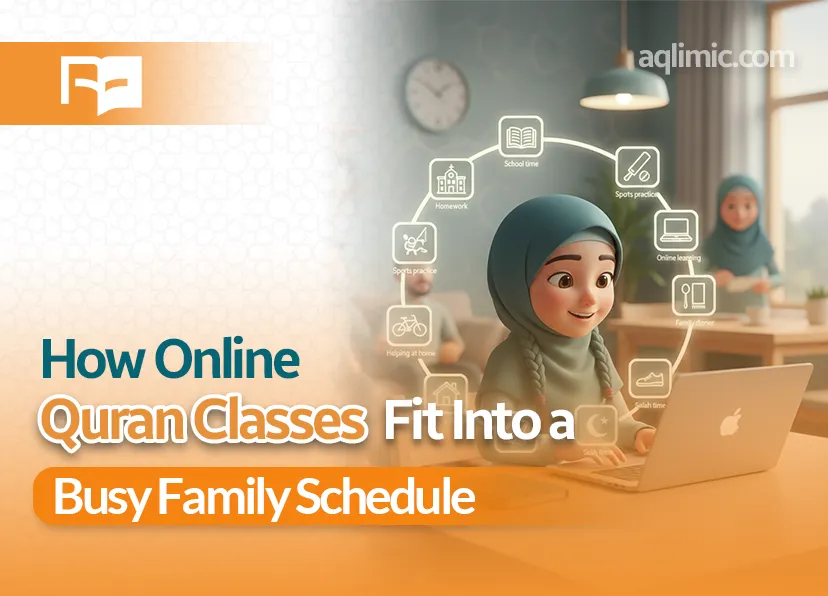
Families today juggle more commitments than ever before. Children attend school for long hours, followed by homework, extracurricular activities, and screen time. Parents balance careers, household responsibilities, and family obligations.
Traditional Quran classes often require travel, fixed schedules, and long waiting times. For many families, especially those living in cities or abroad, this creates friction.
Missed classes, rushed evenings, and tired children can slowly turn Quran learning into a struggle instead of a source of peace.
Online Quran classes remove many of these logistical challenges and replace them with flexibility and control.
Why Online Quran Learning Works for Busy Families
The biggest advantage of online Quran education is adaptability.
Families can choose class times that fit their routine rather than reshaping their entire day around a class location. Lessons can be scheduled early in the morning, after school, in the evening, or on weekends.
Parents no longer need to factor in travel time, traffic, or weather. A child can move from schoolwork to Quran learning without leaving home.
This ease of access allows Quran education to coexist with busy schedules instead of competing with them.
Flexible Scheduling That Respects Family Life
One of the strongest benefits of online Quran classes is scheduling flexibility.
Many platforms offer a wide range of time slots across different time zones. This is especially helpful for families with varying work shifts or children attending different schools.
Parents can select lesson durations that suit their child’s attention span. Younger children may benefit from shorter sessions, while older children or adults may prefer longer ones.
Consistency matters more than duration. A short, regular class fits better into a routine than long, irregular sessions.
Learning From Home Reduces Stress for Everyone
Home is where children feel most comfortable. Learning in a familiar environment reduces anxiety and increases focus.
There is no rush to get dressed, no pressure to arrive on time, and no fatigue from travel. Children begin their Quran lesson calm rather than stressed.
Parents benefit too. They save time, energy, and mental load. This calm atmosphere supports better learning outcomes and more positive attitudes toward Quran study.
Online Quran classes allow learning to happen within the rhythm of daily life rather than disrupting it.
How Parents Can Build Quran Learning Into Daily Routines
Quran education does not need a separate, complex schedule. It works best when it becomes part of everyday life.
Parents can link Quran lessons to existing routines. For example, a short class after school, before dinner, or after Maghrib prayer. When learning aligns with daily habits, resistance decreases.
Consistency builds discipline without pressure. Children begin to expect and accept Quran time as naturally as homework or meals.
Parents should avoid scheduling Quran lessons when children are already exhausted. A fresh mind learns better than a tired one.
One Child or Multiple Children, How Online Classes Adapt
Families with multiple children often worry about managing different schedules.
Online Quran learning offers solutions. Some platforms provide back-to-back sessions with the same teacher. Others offer small group classes for siblings at similar levels.
Parents can stagger class times or choose shared sessions depending on age and learning needs.
This adaptability makes online Quran classes suitable for families of all sizes without adding chaos.
The Role of Parents in Online Quran Learning
Online learning does not remove the role of parents. It reshapes it.
Parents do not need to teach the Quran themselves, but their involvement supports success. Simple actions make a difference, such as setting up the learning space, checking progress, and encouraging practice.
Parents can observe lessons occasionally to understand their child’s strengths and challenges. Communication with teachers helps align expectations and goals.
Support works better than pressure. Children thrive when they feel encouraged rather than monitored.
Creating a Simple and Respectful Learning Space
A dedicated learning space helps children focus.
This does not require a full room. A quiet corner with a chair, table, and minimal distractions is enough. Keeping devices unrelated to learning away during class time improves concentration.
Consistency in space reinforces consistency in habit. Children associate that space with Quran learning and approach it with respect.
Technology as a Helper, Not a Distraction
Technology plays a supporting role in online Quran education.
Live video allows teachers to listen, correct, and guide in real time. Screen sharing and digital whiteboards help explain Tajweed and pronunciation. Recorded sessions allow revision when needed.
However, simplicity matters. Platforms that are easy to use reduce frustration for both parents and children.
One example of a structured and family-friendly approach to digital Quran learning can be explored at Aqlimic.
Such platforms focus on clarity, accessibility, and flexible scheduling, which is essential for busy households.
Balancing School, Activities, and Quran Learning
Some parents worry that adding Quran classes will overwhelm their child.
The key is balance.
Online Quran classes should complement school and activities, not compete with them. Limiting session length, maintaining reasonable expectations, and allowing rest days prevents burnout.
Children benefit when Quran learning feels meaningful rather than forced. A calm approach supports long-term commitment.
Parents should remember that quality matters more than quantity.
Online Quran Learning for Working Parents
Working parents often feel guilt about limited time with their children.
Online Quran learning helps reduce that burden. Parents can stay nearby during lessons, listen occasionally, and participate without disrupting work schedules.
Some parents choose early morning or late evening sessions to align with their availability. Others rely on recorded sessions to stay informed.
This flexibility allows parents to remain involved without sacrificing professional responsibilities.
Online Quran Classes for Weekends and Holidays
Not every family can manage weekday classes.
Many platforms offer weekend and holiday options, allowing families to maintain consistency even during busy weeks.
This is especially helpful during exam periods, travel, or seasonal schedule changes.
Online learning adjusts to life rather than demanding rigid commitment.
Teaching Tajweed and Memorization Within Limited Time
Even with short sessions, effective teaching is possible.
Teachers trained in online instruction focus on clarity and repetition. Tajweed is taught step by step, with immediate correction. Memorization is broken into manageable portions.
Revision plays a critical role. Short daily practice reinforces learning more effectively than long weekly sessions.
Parents can support by encouraging brief recitation practice outside class time.
Avoiding Common Scheduling Mistakes
Some families try to fit too much into one day.
Overloading children leads to resistance and fatigue. Quran learning should feel purposeful, not rushed.
Another mistake is constantly changing class times. Stability helps children build habits and reduces mental load.
Parents should also avoid canceling classes frequently. Consistency strengthens discipline and respect for learning.
Measuring Success Beyond the Schedule
Success is not measured by how many classes fit into a week.
It is measured by consistency, improvement, and attitude. A child who enjoys Quran class is more likely to continue learning long term.
Parents should look for progress in pronunciation, confidence, and engagement rather than speed.
Feedback from teachers helps track development without creating pressure.
Online Quran Learning as a Long-Term Solution
For many families, online Quran classes begin as a practical choice. Over time, they become a preferred one.
Children grow comfortable with their teachers. Parents appreciate the flexibility. Learning becomes steady rather than sporadic.
This stability supports not only Quranic knowledge but also spiritual connection and discipline.
Busy schedules do not disappear. Online learning simply adapts around them.
Final Thoughts
Faith should not feel like an extra burden in an already busy life.
Online Quran classes allow families to honor Quran education without sacrificing balance, peace, or well-being.
By offering flexibility, comfort, and structure, online learning fits naturally into modern family routines.
With thoughtful scheduling, supportive parents, and qualified teachers, Quran education can remain consistent even in the busiest households.
The goal is not perfection. It is continuity, connection, and calm.
